Every booking system demo follows the same charmed journey: the customer picks a slot, types perfect details, pays first time and gets a cheerful confirmation. Demos are sunny like that.
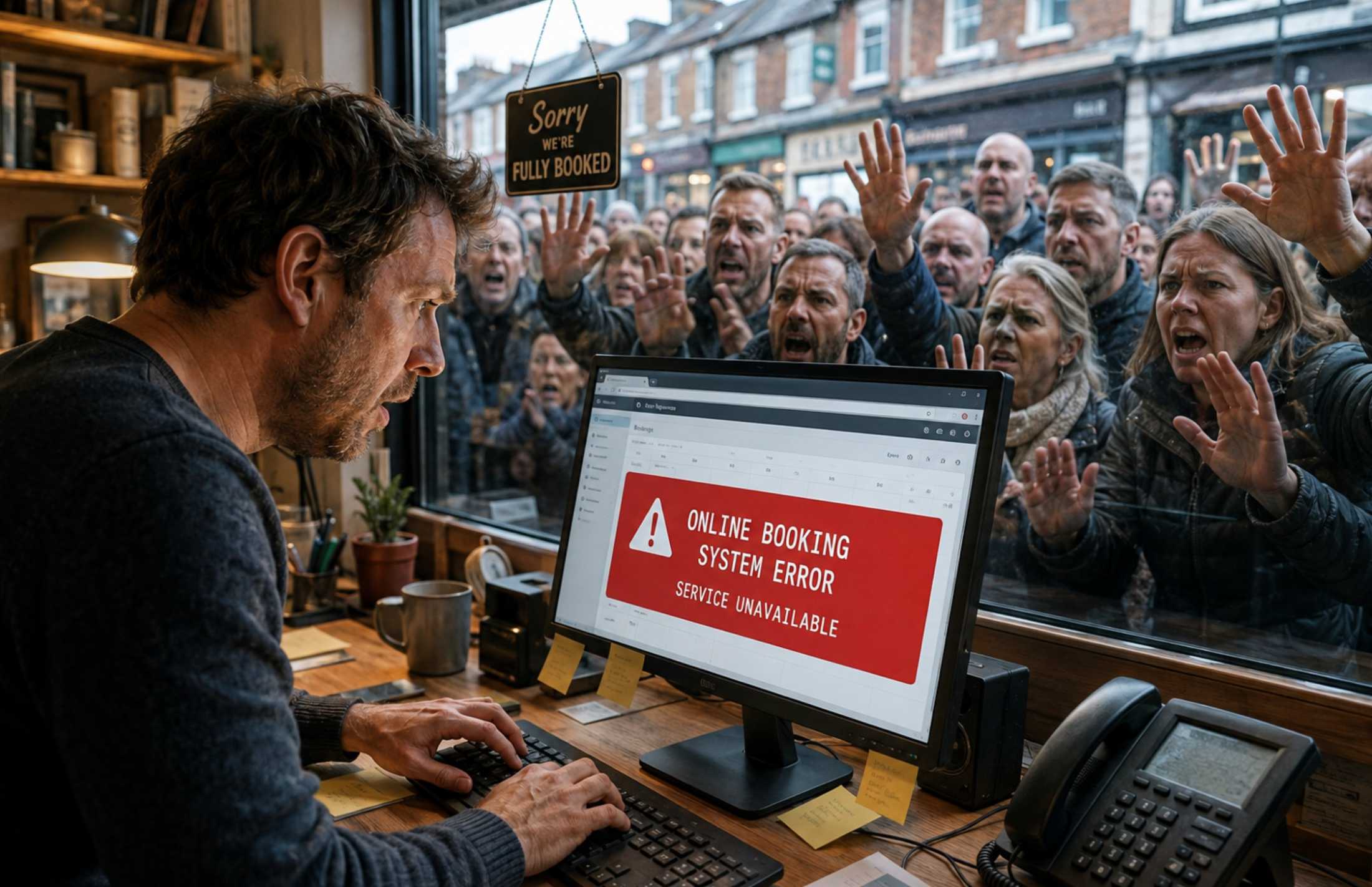
Your Tuesday afternoon is not a demo. It's the double booking, the payment that failed halfway, the customer who wants to move Thursday to Friday, the deposit refund with a question mark over it. We looked at the machinery behind the happy path in Inside a Booking System. This piece is about everything that falls off it, because how your system handles the exceptions is what your customers remember, and what your staff live with.
Pending. Reserved. Confirmed. Cancelled. Four words your team uses daily, and if you asked three people to define them you might get five answers. A dependable system pins each state down: what event moves a booking in, what moves it out, whether it consumes capacity, whether money is expected, what's been communicated and who owns the next action. Vague states are where bookings go to get lost.
Money rarely arrives as one tidy transaction. Deposits, balances, part-refunds, the payment that succeeded just as the session timed out. Treat payment as its own connected workflow with its own states, and the booking record always knows exactly where the money stands. Treat it as a checkbox and you'll be reconciling by hand every Friday.
Customers change their minds. That's not an edge case, it's Tuesday. Amendments should preserve the original details, reprice correctly, respect capacity, and trigger the right communication, all without a staff member rebuilding the booking from memory. The same goes for cancellations and refunds: design the rules together, in advance, so that when someone cancels the discounted early-bird package half-used, the answer is policy, not a debate.
Some cases will always need a person: the incomplete details, the conflicting record, the genuinely unusual request. The system's job is to catch them and line them up in a proper exception queue with everything a staff member needs to resolve each one. What it must never do is let them sink silently into the database. An exception nobody sees isn't handled. It's hidden.
When something goes wrong, the system should communicate what it knows: your payment didn't complete, your place is held until 4pm, here's what happens next. Confident guesses ("your booking is confirmed!" while the payment is still in doubt) are how a small glitch becomes a complaint with screenshots.
When we build booking systems, whether for the web or a mobile app like the one Jones International's passengers use, we test whole stories, not individual pages. The abandoned checkout that comes back an hour later. The refund on the amended booking. The two customers and the one remaining seat. Screens can all work while the story between them fails, and it's the story your customer experiences.
The theme running through all of it: automate the clear rules, surface everything else to a human, and keep an honest record of what happened. If your current system handles sunny days beautifully and rains chaos the rest of the time, that's a design gap, and it's one we can close.



We're proud to have been recognised as Wales' Most Trusted Web Design & Development Company for 2025. This award reflects our commitment to delivering exceptional digital solutions and outstanding client service that sets the standard for excellence.