Your customer asks to move a booking to the following Friday and bring two extra people. The message makes sense to you. It doesn't tell you whether the new date has space or whether the booking can still be changed.
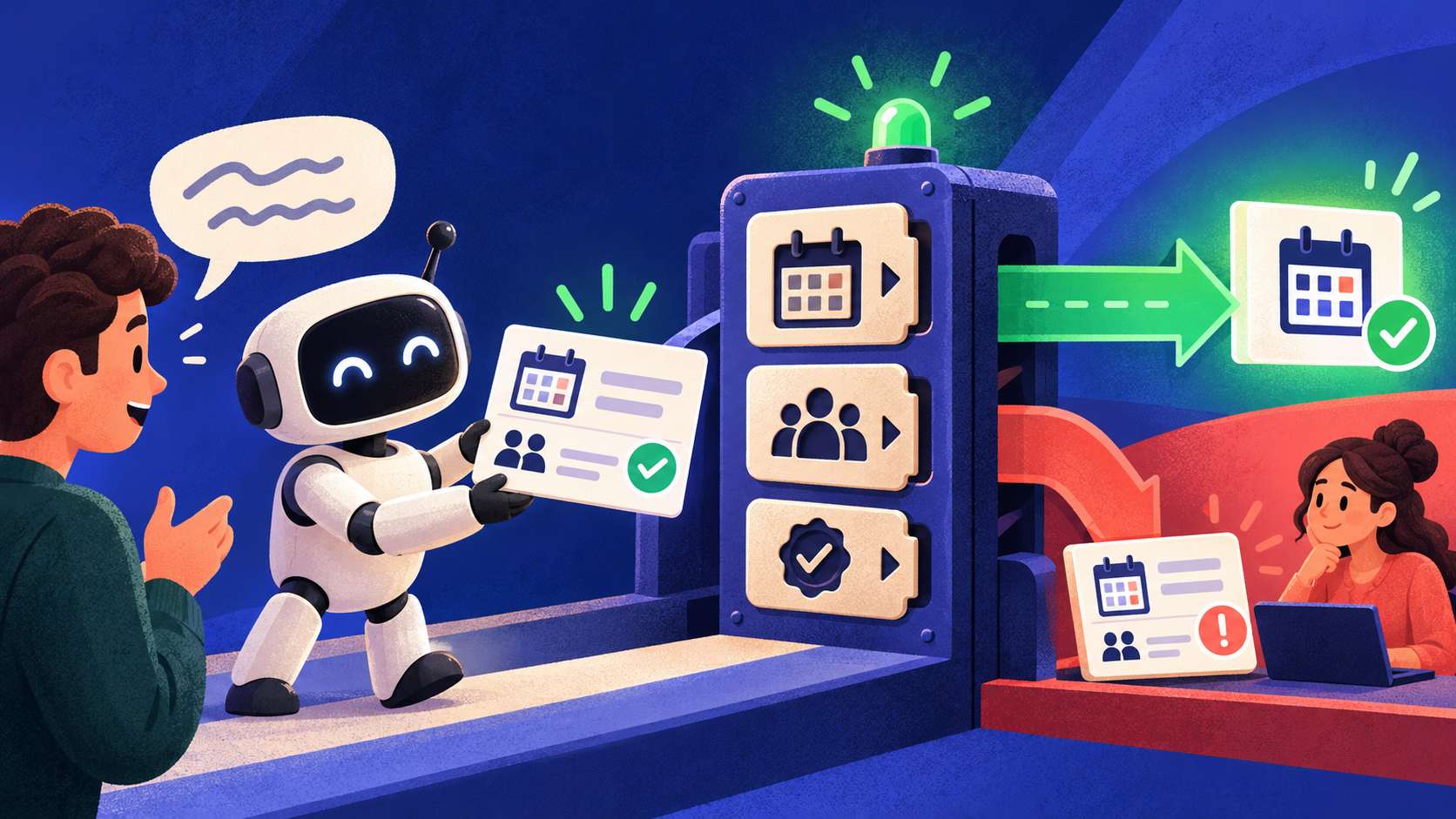
A useful assistant could turn that message into a clear amendment request, let your booking software check the options and prepare a reply. You get help with the reading and administration while your customer gets an answer based on what you can actually provide.
A large language model, or LLM, is the kind of AI used to interpret and generate language. You can use one to propose that this message concerns an amendment, identify the booking reference and flag the requested changes.
The proposal still needs checking. Following Friday could mean different dates depending on when the message was sent and what happened earlier in the conversation. Bringing two extra people might mean adding them to the same booking, not replacing the existing party.
Your assistant should preserve those uncertainties. Producing a complete-looking record by guessing the missing pieces makes the next step less reliable.
Your system can check the booking's current state, the date, the available capacity and the amendment rules you have approved. These are explicit conditions, not opinions about how reasonable the customer sounds.
Think of a short set of agreed conditions: what is allowed, what needs clarification and what needs someone authorised to make an exception. We keep those rules in the software that handles the booking, so they apply consistently however the request arrives.
For this example, you could agree the following:
Give someone responsibility for keeping those conditions current. When your policy changes, you then have a defined set of rules to update and test, rather than different answers buried in several assistant instructions.
Once your system has checked the request, the assistant can prepare an explanation. It needs to know whether the change is proposed, awaiting approval or actually complete.
You don't want it telling your customer their booking has changed when the system has only checked availability. Availability can also change between a check and a later action. The final update needs to enforce the rules again as part of committing the change.
That is the sort of detail covered by OWASP's business-logic security guidance. The important conditions belong in the application, not only in a screen or an AI instruction.
Perhaps the booking falls outside your usual policy, but you want a manager to consider it. Your software should gather the relevant information and pass the decision to that person.
A human approval step must show what is being approved. A button that approves an entire conversation without making the proposed changes visible isn't much help.
That leaves your staff dealing with the exception itself, rather than retyping the message and checking every routine calculation. The combination earns its place through a shorter route from the customer's words to a useful decision.
A reminder three days before an appointment can follow a date rule. Adding a language model doesn't improve the date calculation.
At the other end, a draft summary that you read before using may need no automated decision engine. The right combination depends on the work and the consequences of getting it wrong.
Our automation and AI development brings those parts together. We can help you decide which decisions belong where in your own booking or customer-service process.



We're proud to have been recognised as Wales' Most Trusted Web Design & Development Company for 2025. This award reflects our commitment to delivering exceptional digital solutions and outstanding client service that sets the standard for excellence.


