Unfortunately, that’s exactly what hackers are counting on. Small businesses are often the perfect target because they're less likely to have strong security in place.
So, why should you put this on your to-do list? It’s not just about protecting data, it's about protecting your reputation.
Think about it. When you land on a website and your browser flashes a big red "This site is not secure" warning, what do you do? You leave, fast. If a site looks broken, has been defaced with spam, or just feels 'off', you're not going to hand over your contact details, let alone your credit card number.
That little padlock icon you see in the browser bar (or the lack of it) is a massive signal of trust. It tells your visitors that you're professional and that you take their privacy seriously. If you're hacked, Google can and will blacklist your site, effectively making you invisible. All that hard work on SEO, gone overnight.
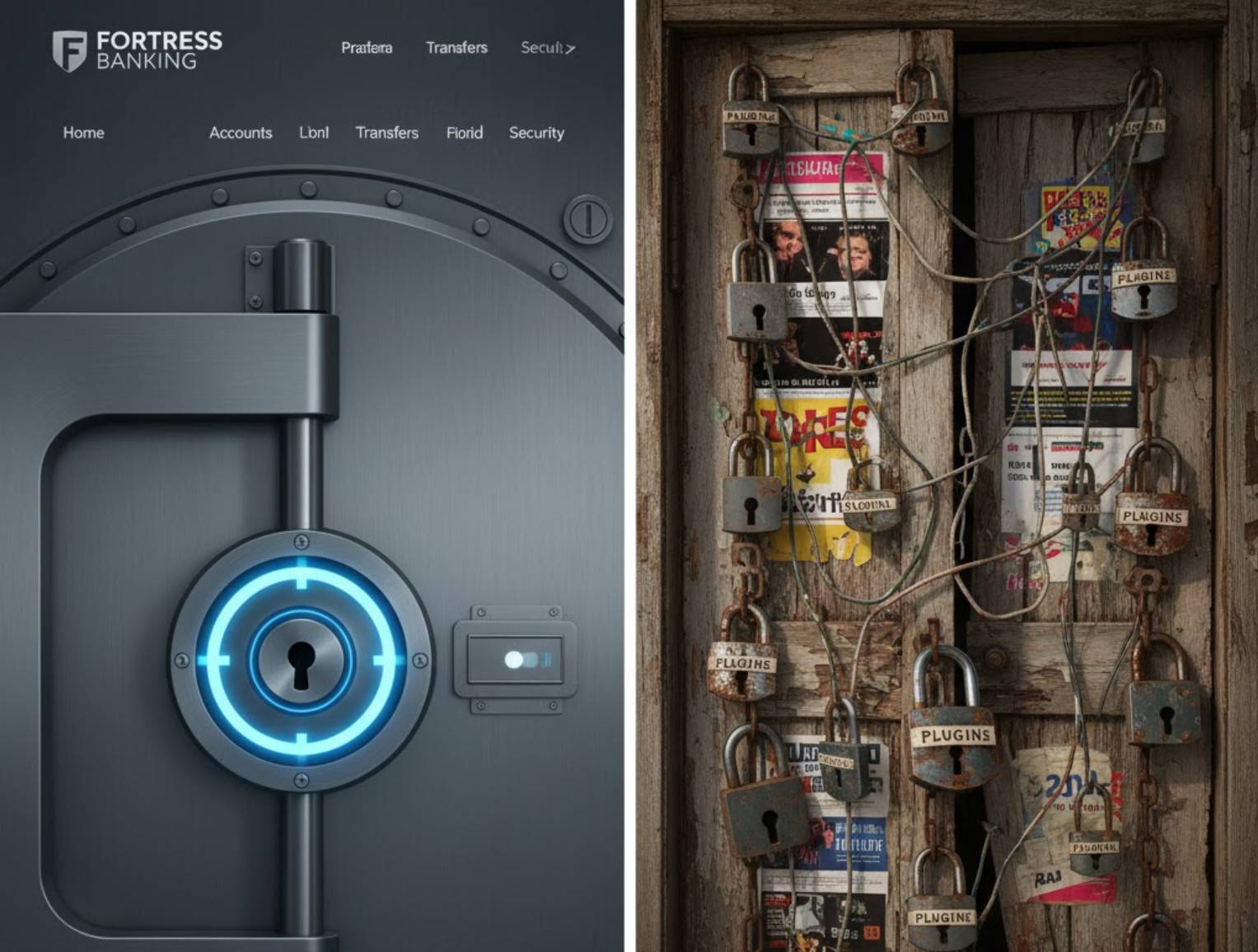
Here’s the bit that most of the industry doesn't like to talk about. A huge number of security problems come from one place: plugins.
Many, many websites are built on massive, generic, one-size-fits-all platforms. To make them do what the client wants (a contact form, a photo gallery, an event calendar), the 'developer' has to bolt on dozens of third-party plugins, often made by different people all over the world.
A site with 20 plugins doesn't just have one piece of software to keep updated, it has 21. Every single plugin is a potential back door, a new window for a hacker to wiggle through. If just one of those plugin developers stops issuing updates, your entire site becomes vulnerable. It’s a nightmare to manage and a massive, flashing target for automated attacks.
This is exactly why we build custom websites. A custom-built site from Pedwar doesn't have this problem. There are no bloated, off-the-shelf plugins. The code is clean, modern, and written specifically for your needs. The attack surface is tiny in comparison. We're not spending our time patching 20 different bits of code, because the security is built-in from day one, not bolted on as an afterthought.
That padlock is called an SSL certificate. In simple terms, it encrypts the connection between your website and your visitor's browser.
It means that if someone fills in your contact form, that information is scrambled as it travels across the internet, making it useless to anyone 'snooping' on the connection. It’s absolutely essential. It’s not just for e-commerce sites anymore, Google expects every single website to have one. Without it, you look amateurish and untrustworthy.
Security isn't just a single feature, it's the foundation of a good website. It’s the peace of mind that your site is working for you, 24/7, without leaving the front door and all the windows wide open.



We're proud to have been recognised as Wales' Most Trusted Web Design & Development Company for 2025. This award reflects our commitment to delivering exceptional digital solutions and outstanding client service that sets the standard for excellence.