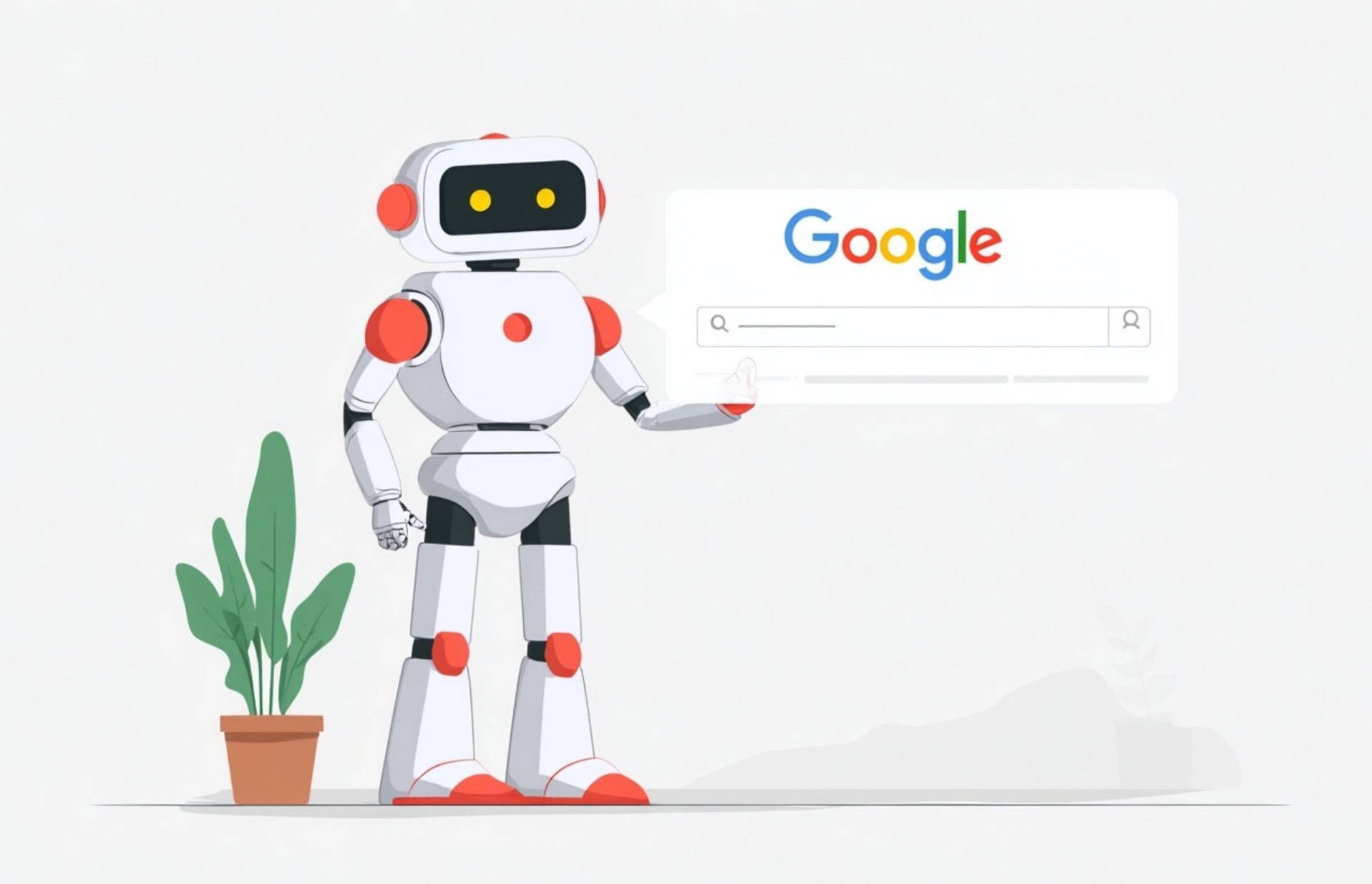
If you have searched for something on Google recently, you may have noticed a significant change. Instead of the usual list of blue links, you are often greeted by a shaded box at the very top of the page containing a direct answer to your question. This is Google’s AI Overview, formerly known as the Search Generative Experience (SGE), and it is arguably the biggest shift in search engine behaviour in twenty years.
For users, it is convenient. For small businesses in Wales and the UK, it presents a new challenge. If Google answers your customer’s question directly on the search page, will they still click through to your website?
At Pedwar, we see AI-assisted search as another reason to get the foundations right: useful information, genuine experience and a website people and search engines can access. None of that depends on a particular CMS.
AI Overviews use generative artificial intelligence to synthesise information from multiple sources across the web. Rather than just indexing your page, Google now reads it, understands it, and uses that information to construct a unique answer for the user.
This feature began rolling out in the UK in mid-2024. It effectively pushes the traditional "organic" search results further down the page. For a user asking "how to fit a new kitchen tap", Google might provide a step-by-step guide within the search results, citing various websites as footnotes.
The immediate concern for many business owners is the potential drop in traffic. This phenomenon is often called the "zero-click" search. If a user gets the phone number, opening hours, or pricing estimate they need from the AI summary, they have no reason to visit your site.
Your website remains important even when an answer appears directly in search. Clear, useful content can support discovery, but no particular layout or writing formula guarantees an AI citation.
A well-built website gives search engines accessible content and visitors a clear route through it. That is possible with bespoke development or an established CMS. What matters is the implementation, not simply the platform name.
Keep important content crawlable and easy to navigate. Semantic HTML is useful for accessibility and maintenance, but perfectly semantic code is not a requirement for Google Search. Neither custom code nor a template guarantees good implementation.
Structured data describes information on a page in a machine-readable format. Appropriate markup should match the visible content and follow the requirements for the feature it targets.
Structured data is not proof of authority, and Google does not require special schema for AI Overviews. It can support eligibility for relevant rich results, but it does not guarantee inclusion in AI answers. See Google's guidance on generative AI search.
Technical foundations are vital, but the content itself matters just as much. Google’s algorithms are increasingly prioritising content that demonstrates E-E-A-T: Experience, Expertise, Authoritativeness, and Trustworthiness.
Clear content and sound technical foundations matter more than promises of a shortcut into AI answers. Start with the questions customers ask and make the information accurate, useful and accessible.
Our bespoke approach gives us control over how a site is implemented and maintained. That can help us address technical requirements directly, but it is not preferential treatment from Google. Rankings and AI citations cannot be guaranteed.
If you are worried about how AI Overviews might affect your business, or if you feel your current site is not working hard enough, let us have a chat. We can explain your options in plain English and help you build a web presence ready for the future of search.



We're proud to have been recognised as Wales' Most Trusted Web Design & Development Company for 2025. This award reflects our commitment to delivering exceptional digital solutions and outstanding client service that sets the standard for excellence.