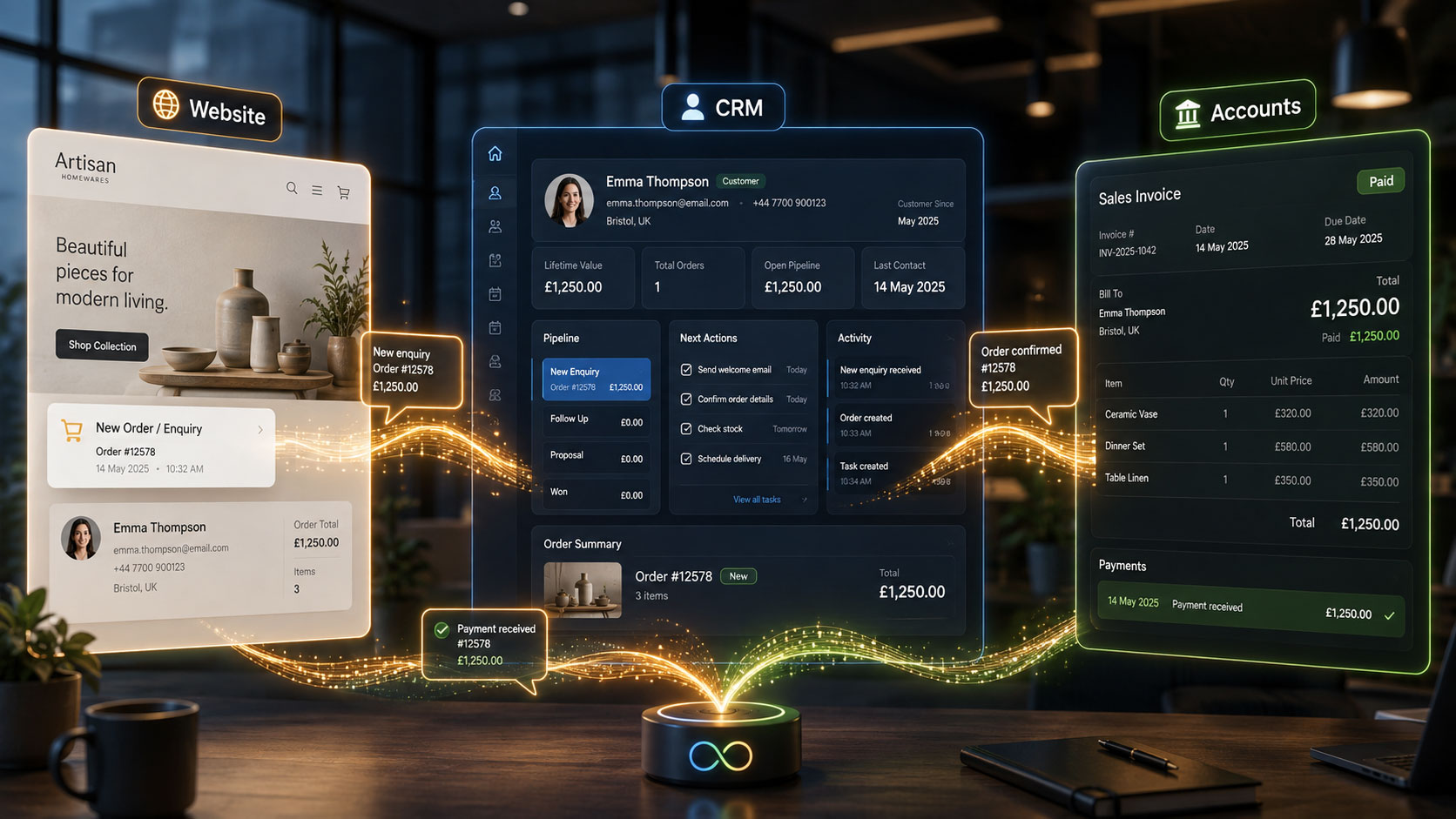
Follow one enquiry through your business and watch how many times it gets retyped. It arrives through the website. Someone copies it into the CRM. A quote gets accepted, so someone recreates it in the accounts package. Payment lands, and someone updates a spreadsheet so the operations side knows. Four systems, three humans playing courier, and a delay at every hop.
Your website, your CRM and your accounts platform are three views of the same customer journey. Connecting them properly turns that relay race into a flow. But, and this matters, an integration is an operational design, not three logos joined by arrows. The value is in the decisions, not the plumbing.
Take a real enquiry and trace it end to end: what information is created, who verifies it, what triggers the next action. Include the corrections and the failed cases, because those are where integrations earn or lose their keep. This is exactly the discipline of mapping a workflow before automating it, and skipping it is how businesses end up automating their own confusion.
Here's the rule that prevents most integration misery: every fact gets exactly one owner. The website owns the original submission and the consent evidence. The CRM owns the working contact details, the sales stage and the communication history. The accounts platform owns the money: what was invoiced, what was paid, what's outstanding.
When two systems both think they own the customer's email address, they will eventually disagree, and your team will spend Friday afternoon working out which one to believe. One owner per fact, everything else reads from it. Dull to decide, priceless to have decided.
A good connection moves on events. A validated enquiry creates or matches a CRM contact and assigns an owner. An accepted quote creates an approved accounts record, once, without retyping. A payment updates the operational view, so the people delivering the work can see the money side without asking. Confirmed events trigger the routine customer communication.
Notice what's not on that list: judgement calls. Qualifying a lead, pricing an unusual job, deciding whether to chase a late payment gently or firmly. Those stay with your people. The integration's job is to make sure your people are working from facts that agree with each other.
Systems go down. APIs change. A sync will fail one day, probably at quarter-end. The difference between a good integration and a liability is whether that failure is visible: queued, flagged and recoverable, rather than silently dropping a record that nobody misses until the customer rings.
This is the heart of our software integration work: joining the tools you already trust, adding automation where it's safe, and building the custom connective tissue where your process is genuinely your own. The result isn't exciting to look at. It's just an enquiry that becomes an invoice without anyone playing courier.



We're proud to have been recognised as Wales' Most Trusted Web Design & Development Company for 2025. This award reflects our commitment to delivering exceptional digital solutions and outstanding client service that sets the standard for excellence.